Virtual reality has been growing in the gaming world. Now it is being used in hospitals. There are different types of ways you can experience this.
Google Cardboard has given a lady named Bonny the ability to see again. She suffers from Stargardt disease, where her vision has been lost due to cells in her retina dying. After not being able to see for eight years, she used Google Cardboard. With the assistance of cardboard and an app called Near Sighted VR Augmented Aid she was able to see. The app uses s stereoscopic image, where the app records from the rear camera on your phone, and delivers the same image to the eye. This form of virtual reality is relatively cheap. Starting at twenty dollars for the cardboard, you can experience this.

At
Children's Memorial Hermann, the pediatric patients were surprised with Google Cardboard. Children often do not understand what truly goes on and may find it scary. Dwight Howard had created a video for them to watch that displayed the Toyota Center. It shows them what they may not see in the hospital. With this form of virtual reality, it shows a 360 degree view. You can look up, down, and all around. This can help the children grasp the concept of what their illness is and why they are in the hospital. It is difficult to learn about medical procedures and diagnoses, but it is easy to use technology.

Some of the top
hospitals in the United States, such as, Duke, Stanford, and Johns Hopkins, are beginning to learn about how augmented reality can be beneficial in the operating room. By having constant imaging and data of the patient during surgery, this can alleviate medical errors and and could save more lives. This may make the O.R. the safest room in the hospital. This gives the doctor the opportunity to keep their eyes on the patient and can reduce complications that may occur. Having this in the operating room is beneficial to both the surgeon and the patient. If something goes wrong, the patient may end up spending more money on medical bills. With the assistance of augmented reality, this can save the patient a lot of money.
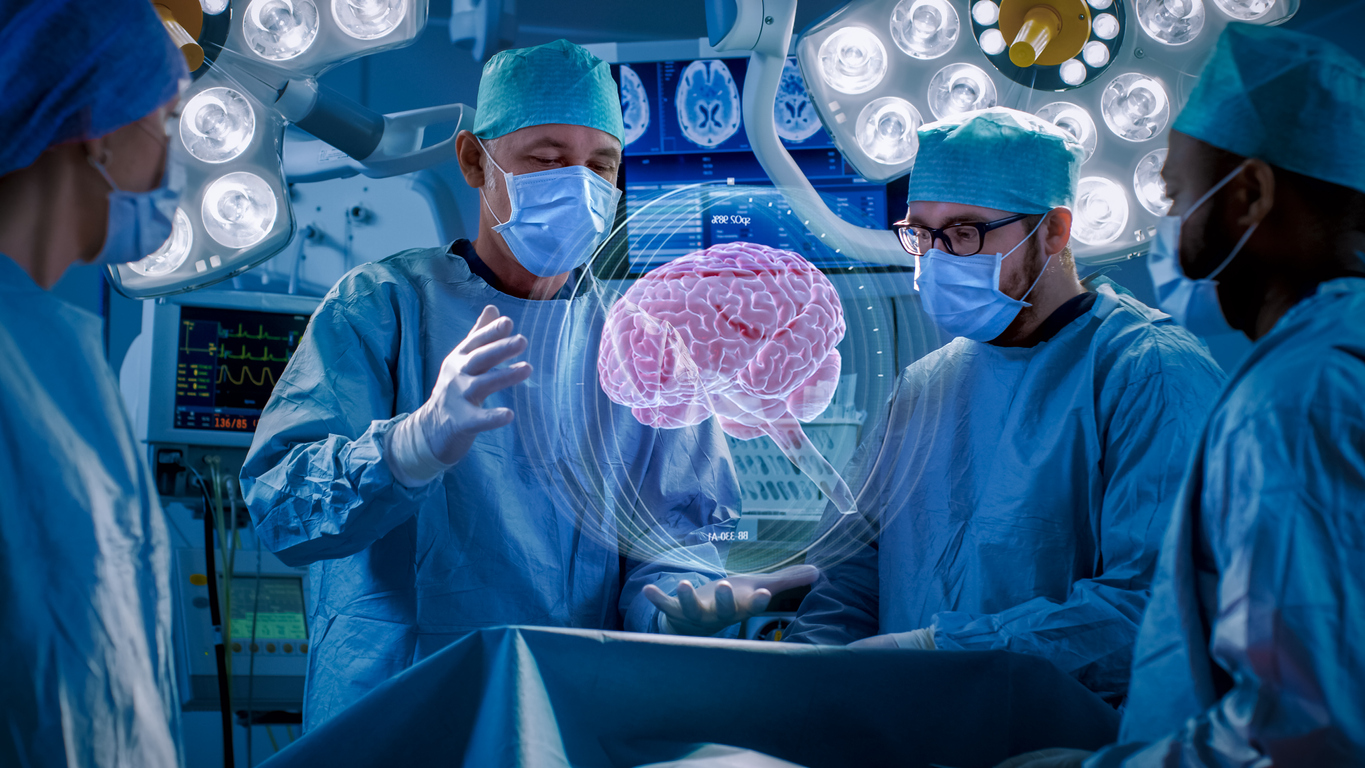
In class this week, we discovered what it is liked to be immersed into another world. With the help of virtual reality, we were able to experience it. I was able to step into an operating room and see what it was like to be the patient. I also got to see the brain, skull, and skeleton removed from a cadaver. It was if it was in 3D. This can be very innovative in the world of medicine because surgeons can get to the bottom of a problem in no time. This will lead to less mistakes and lower number of deaths due to surgical complications.

Comments
Post a Comment